Sacred Knowledge

The Grimoire

Ancient tools, folk magic traditions, and the wisdom carried through generations of rootwork and craft.

☆ ✦ ☆

✦ The Raven Witch Grimoire is offered as educational and historical reference on folk magic traditions. All information is shared for cultural and spiritual exploration. Practice with intention, respect, and personal discernment.
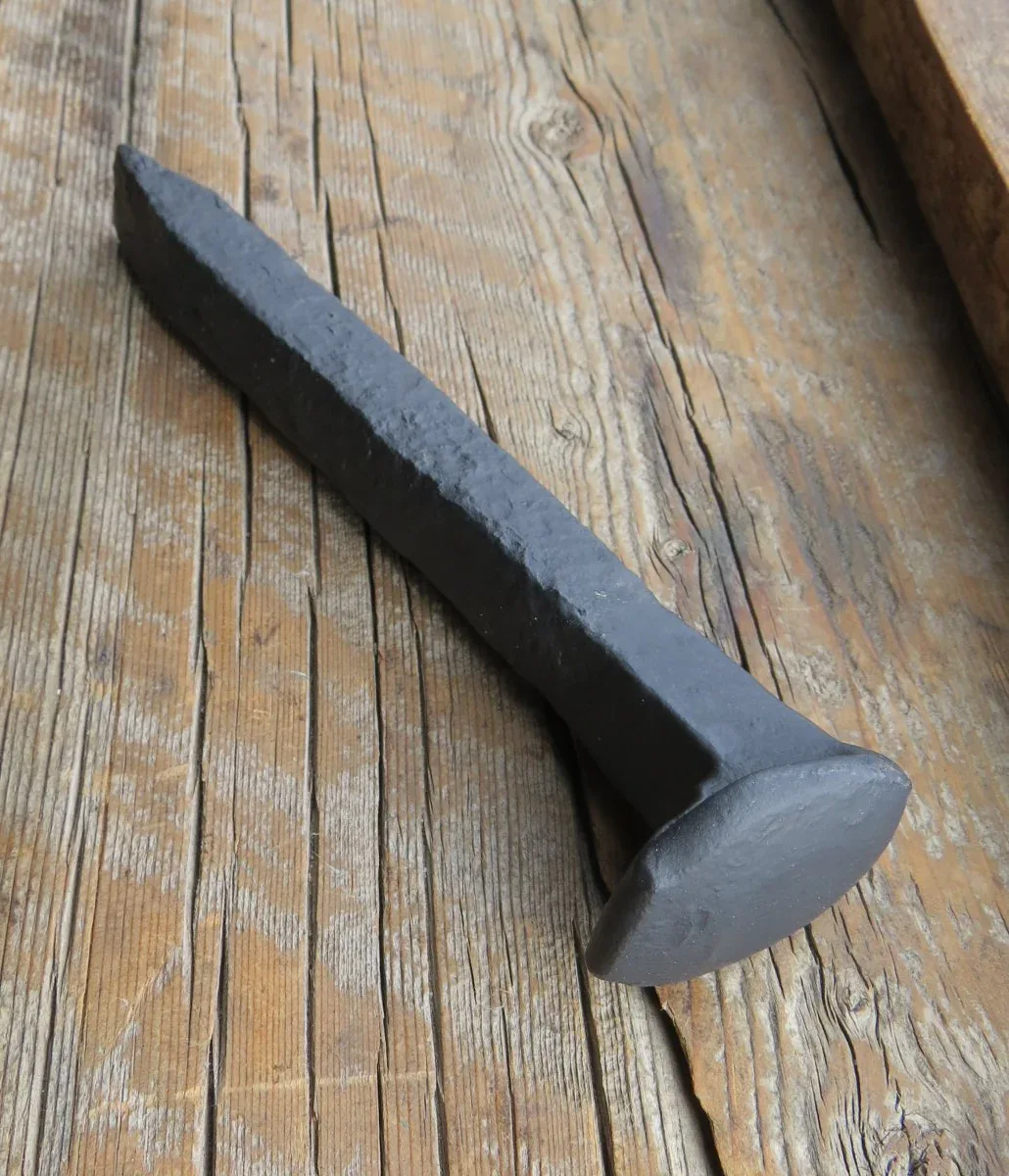
Railroad Spikes
Railroad spikes used in folk magic and hoodoo protection work

Origin & Lore

Railroad spikes carry a long history in American folk magic, hoodoo, and rootwork traditions. Their power stems from iron — one of the oldest protective metals known to humanity — and from their association with roads, crossroads, and the movement of people and spirits across the land.

In hoodoo tradition, the crossroads is a sacred and liminal space where spiritual forces converge. The railroad, a modern crossroads running in all directions, inherited this spiritual significance. Spikes driven into the ground at crossroads were believed to fix power in place, hold spirits, or mark territory with intention.

Iron itself has deep roots across many magical traditions as a material that repels malevolent spirits, grounds energy, and provides lasting protection. Unlike organic materials, iron does not decay — it holds its intention indefinitely.

Traditional Uses

  • ✦

    Home Protection

    Buried at the four corners of a property to create a protective boundary that repels unwanted energy and intruders.

  • ✦

    Fixing & Stability

    Used in spellwork to "fix" a situation in place — to keep something stable, to hold a home, to anchor a relationship.

  • ✦

    Crossroads Work

    Left at crossroads as an offering or as part of a working to open roads, bring opportunity, or call upon crossroads spirits.

  • ✦

    Road Opening

    Carried or placed near doorways to open paths and remove obstacles from one's journey or endeavors.

  • ✦

    Binding Work

    Used in binding spells to nail down an intention, binding a person's actions or holding power in place.

  • ✦

    Altar Tool

    Kept on altars as a symbol of earth, iron, and masculine protective energy — particularly in Orishas and folk traditions.

How to Work With Them

Before use, cleanse the spike with smoke, salt water, or Florida Water to clear any residual energy from its journey. Hold it in both hands and state your intention clearly — the iron will carry that charge.

For property protection, anoint the spike with protective oil (such as fiery wall of protection or Van Van oil) while focusing your intention. Drive or bury one at each corner of your property, beginning in the north and moving clockwise. Speak your protection aloud as each spike is set.

⚠ Note

Railroad spikes are heavy iron — handle with care. Genuine railroad spikes should only be sourced legally. Many practitioners use reproductions or period cut nails with equal efficacy, as intention is the primary carrier of power.
☽ ✦ ☾
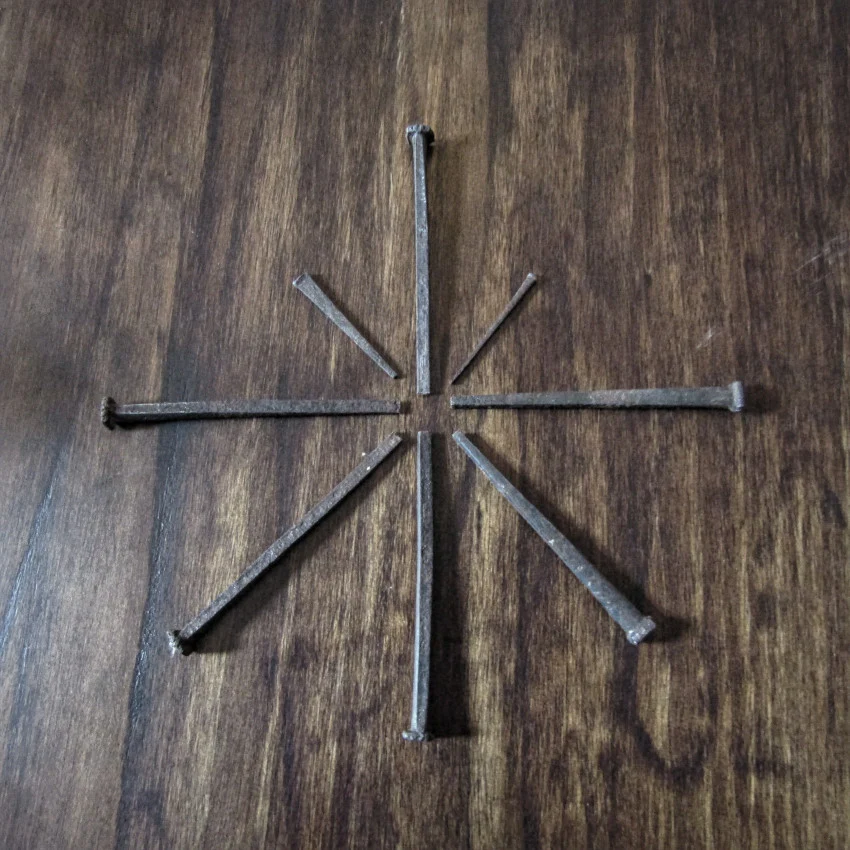
Coffin nails used in hoodoo graveyard magic and binding work

Origin & Lore

Coffin nails are among the most potent and revered curios in hoodoo, Southern conjure, and graveyard magic traditions. Their power derives from their direct association with death, the ancestors, and the spirit world. A nail that has sealed the dead within a coffin carries the energy of that crossing — the threshold between worlds.

In traditional hoodoo, items from the graveyard hold immense spiritual charge. Coffin nails specifically are considered to carry the essence of the spirit world and can be used to call upon the dead, work with ancestor spirits, or channel the finality and permanence of death into spellwork.

True coffin nails — those actually removed from buried coffins — require graveyard protocol: proper offerings to the spirit of the land and to the individual whose coffin was used, typically coins, whiskey, and tobacco left at the grave. Modern practitioners often work with old square-cut nails that approximate their energy.

Traditional Uses

  • ✦

    Banishing & Endings

    Used to nail shut a situation, relationship, or harmful influence — ending it with the finality of death.

  • ✦

    Binding Spells

    Driven through poppets or written names to bind a person's harmful actions or to hold them in place.

  • ✦

    Ancestor Work

    Placed on ancestor altars as a bridge between the living and the dead, honoring those who have crossed.

  • ✦

    Reversing Work

    Used in reversal spells to send harm or negative energy back to its source with the permanence of iron.

  • ✦

    Protection

    Carried or placed in a mojo bag for powerful protective workings — the dead protect their own.

  • ✦

    Curse Work

    In more advanced practice, used in crossing and cursing work — approached with extreme care and ethical consideration.

How to Work With Them

Coffin nails should be treated with deep respect. Before working with them, acknowledge the spirit world and make an offering — even a simple glass of water and a spoken acknowledgment honors the energy these nails carry.

For banishing work, write the name of what you wish to end on paper, fold it away from you, and drive a coffin nail through the center while stating your intention with conviction. Bury the paper at a crossroads or in a graveyard to seal the working. For binding, the nail is driven through the target name or poppet with spoken words of binding, then sealed with black wax.

⚠ Note

Coffin nails carry heavy death energy and should be handled mindfully. Cleanse yourself after working with them. They are not recommended for beginners without guidance, and curse work should never be undertaken lightly — what is sent out carries consequence.

☽ ✦ ☾
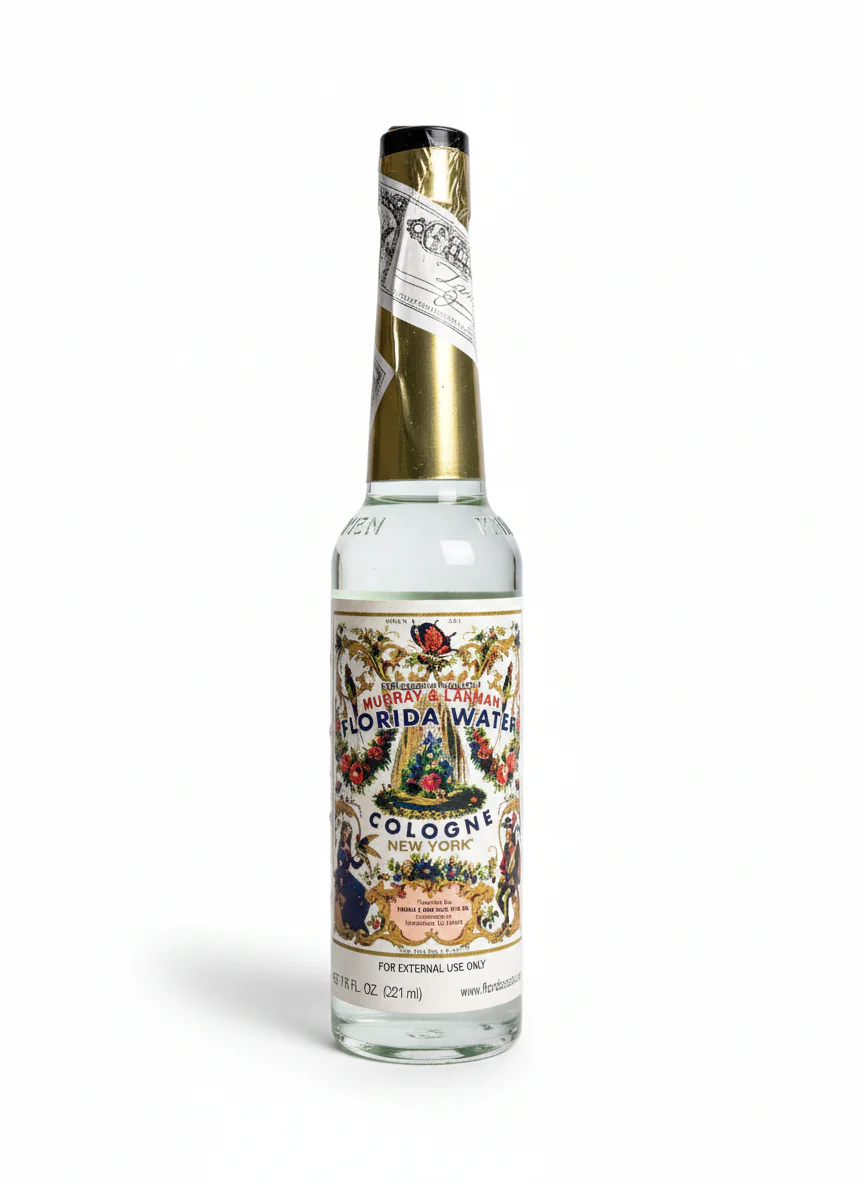
Florida Water spiritual cologne used for cleansing and offerings

Origin & Lore

Florida Water is one of the most versatile and widely used spiritual tools in the Western Hemisphere. First commercially produced in the early 1800s by Murray & Lanman, it is a citrus and floral cologne water with deep roots in Afro-Caribbean spiritual traditions including Santería, Candomblé, Umbanda, and hoodoo, as well as in Latin American folk Catholicism.

Despite its commercial origins, Florida Water has been adopted into spiritual practice so thoroughly that it is considered a sacred tool in its own right across dozens of traditions. Its bright, clean citrus scent — primarily orange blossom, lavender, and clove — is believed to attract positive spirits, cleanse negative energy, and elevate vibration.

In Afro-Caribbean traditions, Florida Water is used to honor the Orishas and ancestors. It is poured as an offering, sprinkled to cleanse spaces, and used to open spiritual communication. In hoodoo it serves as a universal cleansing agent and spiritual cologne that can substitute for or complement many other liquid preparations.

Traditional Uses

  • ✦

    Space Cleansing

    Sprinkled or sprayed throughout a space to clear stagnant, heavy, or negative energy — particularly after arguments or illness.

  • ✦

    Ancestor Offerings

    Poured onto ancestor altars or gravesites as an offering that honors and feeds the spirits of the dead.

  • ✦

    Personal Cleansing

    Applied to the body — wrists, back of neck, crown of head — to cleanse the aura and remove spiritual debris.

  • ✦

    Tool Consecration

    Used to cleanse and consecrate spiritual tools, tarot cards, crystals, and sacred objects before use.

  • ✦

    Floor Wash

    Added to mop water to spiritually cleanse floors and thresholds, protecting the home and attracting positive energy.

  • ✦

    Spell Ingredient

    Used as a base in many spells and washes — added to baths, combined with herbs, or used to dress candles for attraction and clarity work.

How to Work With It

Florida Water is ready to use as-is — no preparation needed. For space cleansing, pour a small amount into your palm or a spray bottle and move through your space from back to front, allowing the mist or sprinkle to touch all corners. Open a window or door to allow displaced energy to exit.

For personal cleansing, apply a small amount to your wrists, the back of your neck, and the crown of your head while visualizing a bright, clean light washing over you. For altar and ancestor work, pour a small offering into a glass or dish near your ancestral photos or sacred objects, or pour directly onto the ground as an earth offering.

Florida Water pairs exceptionally well with other folk magic tools — combining it with railroad spikes or coffin nails to cleanse these items before working with them is a common and effective practice.

⚠ Note

Florida Water contains alcohol and is flammable — keep away from open flame when using near candles. Do not ingest. Some individuals with sensitive skin may wish to dilute before applying directly to the body.

☽ ✦ ☾
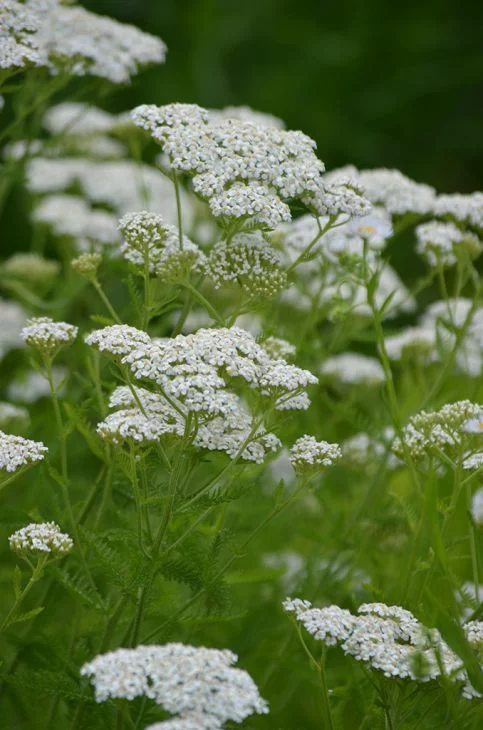
Dried yarrow used in folk magic for protection, courage, and divination

Origin & Lore

Yarrow takes its botanical name, Achillea, from the legend of Achilles, who was said to carry the herb into battle to stanch the wounds of his soldiers. This martial association has followed the plant through centuries of folk practice, earning it the name Soldier's Woundwort and cementing its reputation as an herb of courage, protection, and resilience under fire.

Across European folk magic and witchcraft traditions, yarrow occupies a dual role — it is both a healer's herb and a diviner's herb. Its feathery leaves and clustered white blooms were dried and hung in doorways to guard the home from harm, while its stalks were cast and read for guidance long before the I Ching adopted the practice. In some traditions it was tucked beneath a pillow to summon prophetic dreams of a future love, giving rise to its old name, "the love herb."

Its bitter, slightly sharp scent and its ability to stop bleeding gave it a reputation as an herb that stands at the threshold between harm and healing — fitting for a plant so often called upon for protection, banishing, and courage in the face of conflict.

Traditional Uses

  • ✦

    Protection

    Hung over doorways or carried in a sachet to ward the home and its keeper from harmful energy and ill intent.

  • ✦

    Courage & Strength

    Carried into difficult confrontations or challenges to steady the nerves and call upon the resolve of Achilles' soldiers.

  • ✦

    Divination

    Dried stalks used in casting and reading, or the whole plant kept near tarot and scrying tools to sharpen intuition.

  • ✦

    Love & Dreaming

    Tucked beneath a pillow to invite dreams of a future love or to strengthen an existing bond.

  • ✦

    Banishing

    Burned or scattered to sever ties with a person, habit, or lingering energy that no longer serves.

  • ✦

    Healing Work

    Included in healing sachets and baths, carrying forward its ancient reputation as a wound-mending herb of the body and spirit.

How to Work With It

For protection, tie a small bundle of dried yarrow with red thread and hang it above the main entrance of your home, replacing it once it has fully dried and browned. For courage before a difficult moment, carry a sprig in a pocket or small sachet and hold it briefly while stating your intention aloud.

For divination or dreaming work, place dried yarrow beneath your pillow or near your reading space, and cleanse it periodically with smoke to keep its energy clear. When banishing, burn a small amount on charcoal while visualizing the tie being cut, then release the ashes outdoors, away from your home.

⚠ Note

Yarrow is generally safe to handle, but those with allergies to ragweed and related plants may experience skin sensitivity. Avoid ingestion during pregnancy. As with all herbal work, this entry is offered for folk magic and historical reference, not as medical advice.

☽ ✦ ☾
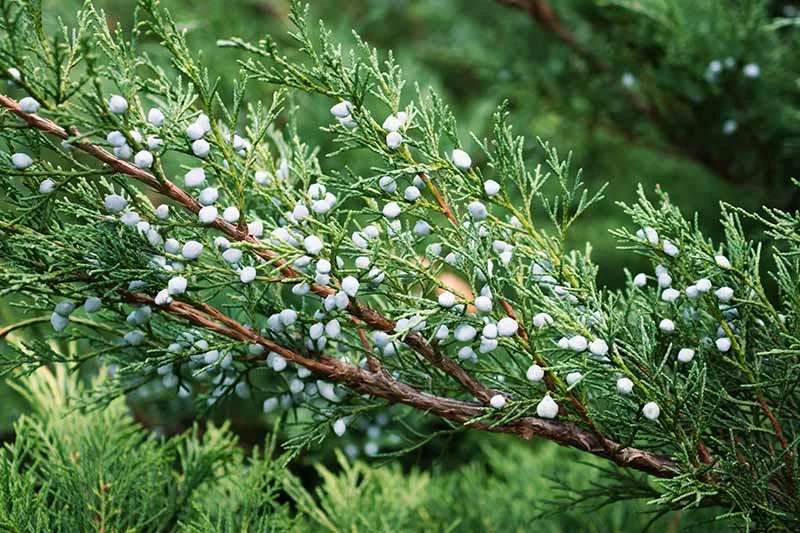
Juniper berries on the branch, used in folk magic for protection and purification

Origin & Lore

Juniper has stood watch over thresholds for thousands of years. Its blue-frosted berries — technically small cones, not true berries — were burned in ancient Mediterranean and European rites to purify temples, ward off plague, and drive out unseen malevolence. Sprigs were hung over doors and stables to keep witches, thieves, and evil spirits from crossing in.

In European folk tradition, juniper's sharp, resinous smoke was considered one of the most powerful purifying agents available to the common household, burned during times of illness or after a death in the home to cleanse the air of lingering sorrow and disease. Its evergreen nature — thriving through winter when so much else withers — lent it an association with endurance, protection, and life persisting against the dark.

The berries also carry a long history in folk medicine and, famously, in distillation — they are the defining botanical in gin. This dual identity as both hearth remedy and spirited drink gave juniper a reputation as an herb that warms, protects, and steadies the body and the home alike.

Traditional Uses

  • ✦

    Purification

    Burned as incense or smoke to clear a space of illness, negativity, or the residue of conflict.

  • ✦

    Protection

    Hung over doorways or carried in a sachet to guard the home and its occupants from harmful intent and unwanted spirits.

  • ✦

    Banishing Illness

    Burned in the sickroom or added to a cleansing bath to draw out sickness and speed recovery.

  • ✦

    Psychic Protection

    Carried during spirit work or divination to shield the practitioner from unwanted or intrusive energies.

  • ✦

    Anti-Theft Charm

    Placed near doors and windows in old folk tradition to prevent thieves from entering a home undetected.

  • ✦

    Prosperity Work

    Carried in a mojo bag or added to money spells to invite abundance and steady, protected growth.

How to Work With Them

For purification, burn a small handful of dried berries on charcoal and let the smoke move through every room of your home, paying particular attention to doorways, windows, and corners where stagnant energy collects. Open a window afterward to let the cleared energy leave.

For protection, string dried berries with red thread and hang the strand above your main entrance, or carry a small cloth pouch of berries on your person during times you feel vulnerable. For a protective bath, add a handful of berries to a muslin bag and steep it in warm bathwater while setting an intention of being shielded from harm.

⚠ Note

Juniper berries should not be ingested during pregnancy and should be used cautiously by those with kidney conditions. Some juniper species (such as ground hemlock and certain ornamental varieties) are toxic — only Juniperus communis and other culinary varieties should ever be consumed. This entry is offered for folk magic and historical reference, not as medical advice.

☽ ✦ ☾
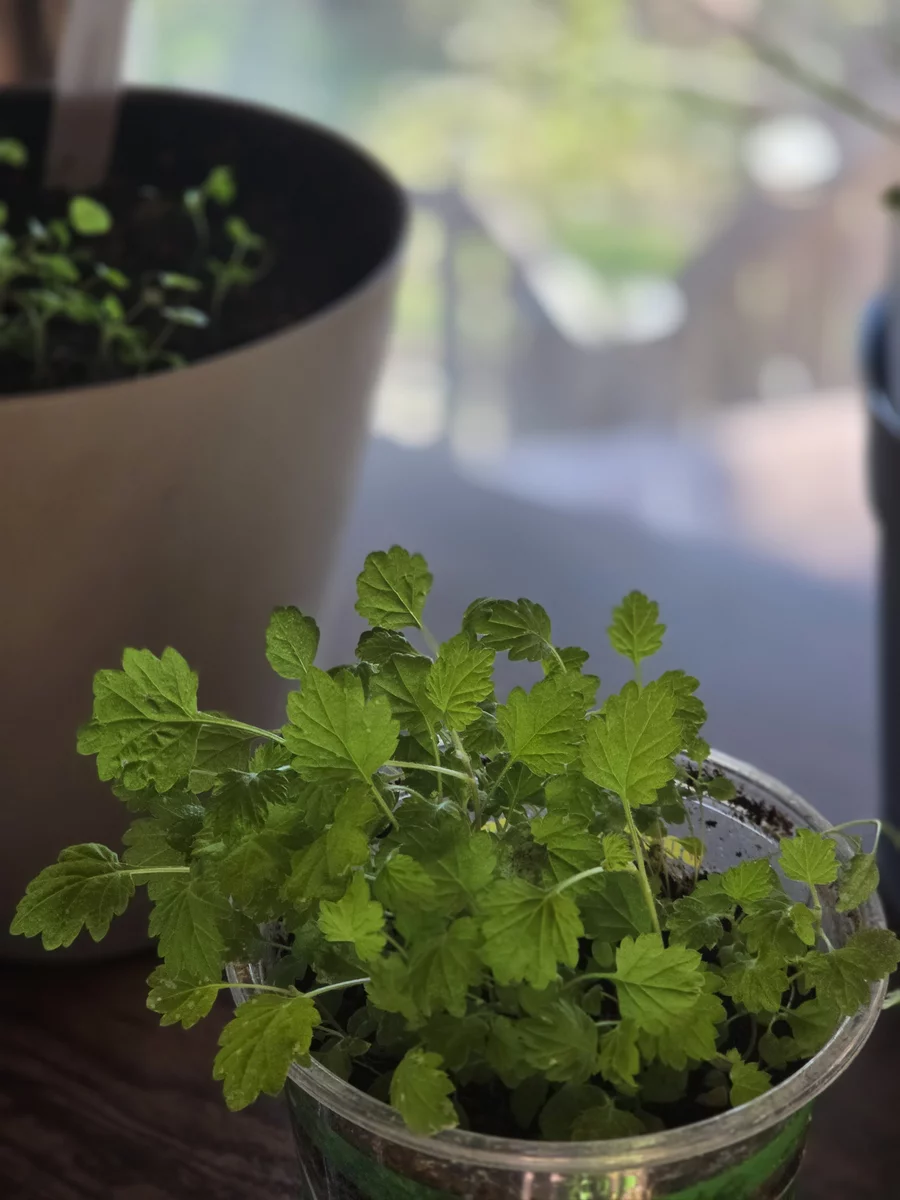
Mugwort seedlings, used in folk magic for dreamwork, divination, and protection

Origin & Lore

Mugwort takes its genus name, Artemisia, from Artemis, the Greek goddess of the moon, the hunt, and wild places — a fitting patron for an herb so deeply tied to intuition, dreaming, and the unseen. Across European, Asian, and Indigenous American traditions alike, mugwort has been burned, brewed, and carried as one of the great visionary herbs, its silvery leaves said to open the veil between waking and dreaming minds.

Anglo-Saxon healers named it one of the nine sacred herbs in the Lacnunga, invoking it by name against poison and infection and against "the loathed foe roving through the land." Travelers tucked it into their shoes to ward off exhaustion, believing it granted the wearer strength and protection on long journeys — a practice that gave rise to one of its oldest folk names, the traveler's herb.

In modern witchcraft, mugwort is most closely associated with dreamwork and divination. Smoked, brewed as tea, or simply kept near the bed, it is said to induce vivid and prophetic dreams, and its smoke has long been used to cleanse and consecrate scrying mirrors, crystal balls, and tarot decks before a reading.

Traditional Uses

  • ✦

    Dreamwork

    Placed beneath the pillow or brewed as a bedtime tea to encourage vivid, lucid, and prophetic dreaming.

  • ✦

    Divination

    Burned to cleanse and consecrate scrying mirrors, crystal balls, pendulums, and tarot decks before a reading.

  • ✦

    Psychic Enhancement

    Carried or brewed before ritual work to heighten intuition and open receptivity to unseen guidance.

  • ✦

    Protection on Journeys

    Historically tucked into shoes or carried while traveling to ward off fatigue and misfortune on the road.

  • ✦

    Astral Work

    Used before meditation or astral projection to ease the mind's passage into altered states.

  • ✦

    Cleansing & Banishing

    Bundled and burned like smudge to clear a space of stagnant energy before spellwork or divination.

How to Work With It

For dreamwork, place a small dried sprig in a sachet beneath your pillow, or steep a teaspoon of dried mugwort in hot water for ten minutes and drink a small cup an hour before bed. Keep a dream journal nearby, as mugwort dreams are often vivid but fade quickly upon waking.

For divination work, bundle dried mugwort with cotton string and burn it like a smudge stick, passing your tarot deck, crystal ball, or scrying mirror through the smoke while stating your intention to see clearly. The same smoke can be used to clear a reading space before sitting down to work.

⚠ Note

Mugwort should be avoided during pregnancy, as it has historically been used to stimulate the uterus. Those with allergies to ragweed and related plants should use caution. This entry is offered for folk magic and historical reference, not as medical advice.

☽ ✦ ☾
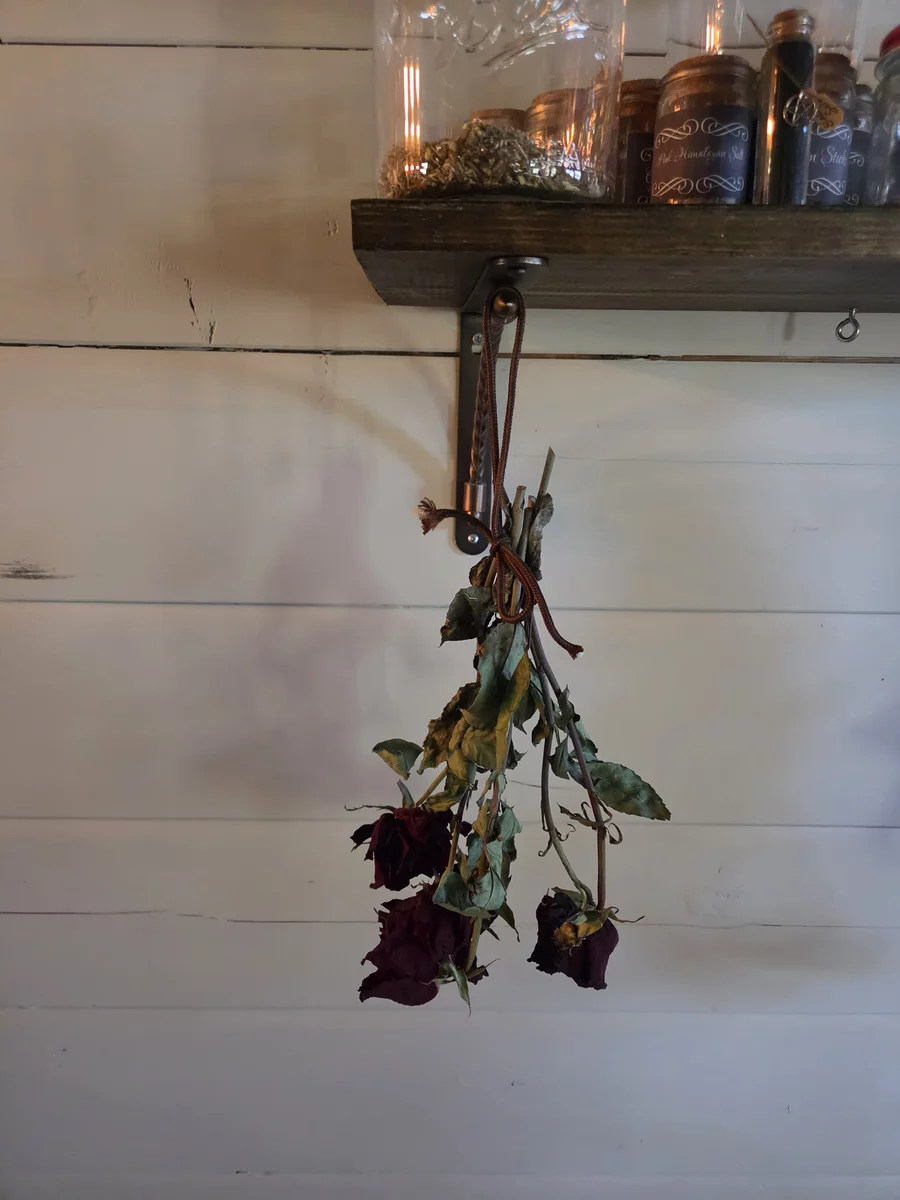
Dried red roses hung to cure, used in folk magic for love and heart work

Origin & Lore

The red rose has carried the weight of love and desire across nearly every magical tradition it has touched, ruled since antiquity by Venus and Aphrodite, goddesses of love, beauty, and passion. Its thorns and its bloom together made it a symbol practitioners understood instinctively: love that is beautiful is rarely without its cost, and the rose has long stood for both in equal measure.

In hoodoo and European folk magic alike, dried red rose petals became a staple of love work — bound into sachets, scattered on beds, and steeped into baths meant to draw affection or rekindle a fading romance. Hanging roses to dry upside down, as pictured, is itself an old practice: the drying preserves the flower's color and scent while its power is "fixed" for later use, much as herbs and curios are cured before spellwork.

Beyond romance, the red rose carries deeper heart magic — used in workings for self-love, emotional healing, and courage of the heart, since matters of love were never believed to be only about romantic partners, but about the whole tender work of the heart itself.

Traditional Uses

  • ✦

    Love Drawing

    Carried in a sachet or scattered near the bed to attract new romance or deepen an existing connection.

  • ✦

    Self-Love Work

    Added to baths or altars for workings focused on healing one's relationship with oneself.

  • ✦

    Heart Healing

    Burned or steeped in tea to soothe grief, heartbreak, and emotional wounds after a loss or breakup.

  • ✦

    Beauty & Confidence

    Used in glamour work and baths intended to enhance beauty, charm, and personal magnetism.

  • ✦

    Altar Offering

    Placed on altars dedicated to Venus, Aphrodite, or other love and beauty deities as a fitting offering.

  • ✦

    Spell Jar Work

    Layered into love spell jars and mojo bags alongside rose quartz, honey, or sweetening agents.

How to Work With Them

To cure your own petals for later use, hang whole roses upside down by the stem in a dry, dark space for one to two weeks, as shown, then strip and store the dried petals in a sealed jar out of direct light. For love drawing, scatter dried petals across your bed linens or carry a small handful in a pink or red sachet, refreshing it each new moon.

For heart-healing tea, steep a teaspoon of dried petals in hot water for five to ten minutes while holding the intention of gentleness toward yourself. For a spell jar, layer petals with rose quartz chips and a drop of honey, seal with red or pink wax, and keep it near your bed or on a love altar.

⚠ Note

Ensure any rose petals used in tea or bath work are free of pesticides and safe for the intended use — florist roses are often chemically treated and should be reserved for non-ingested spellwork only. This entry is offered for folk magic and historical reference, not as medical advice.

☽ ✦ ☾
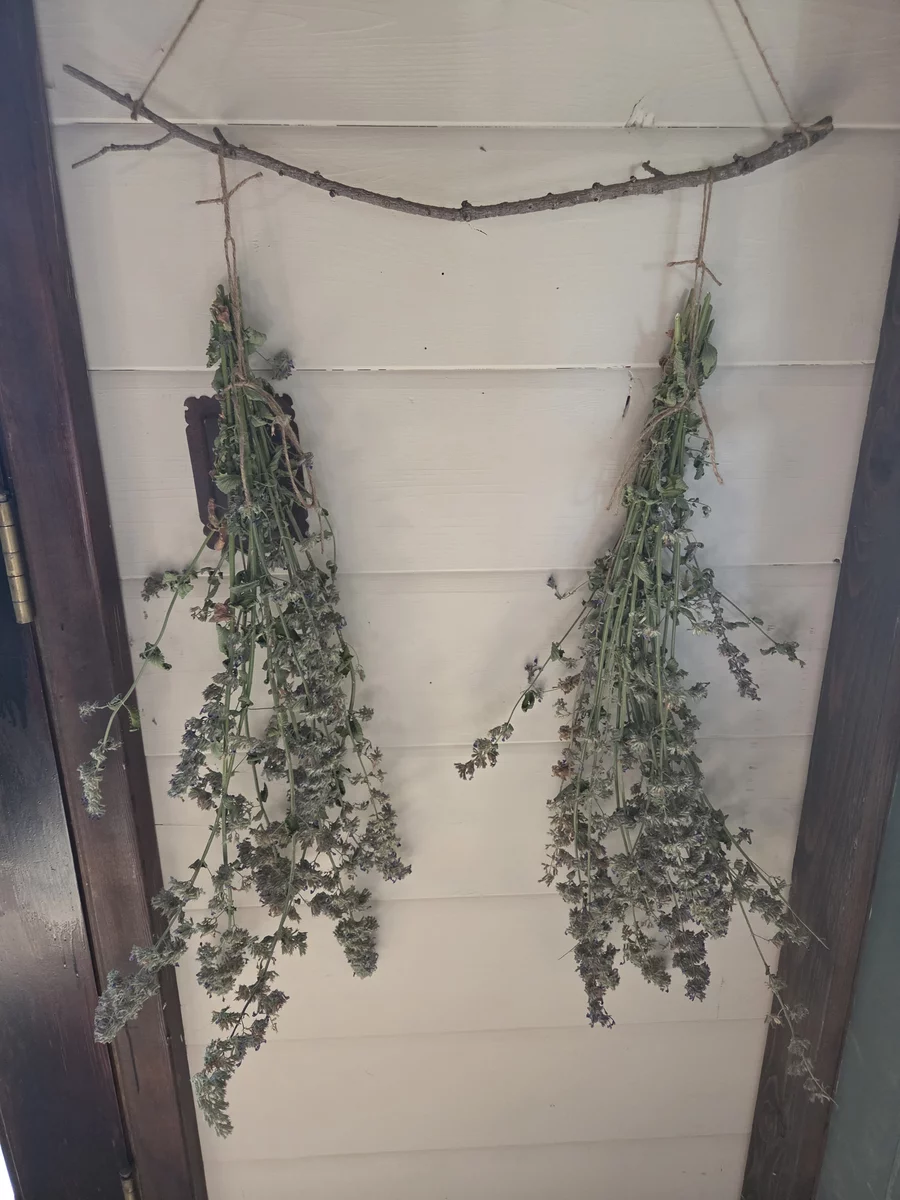
Bundles of Russian sage hung to dry, used in folk magic for cleansing and clarity

Origin & Lore

Despite its common name, Russian sage is not a true sage at all, but a member of the mint family whose silvery, aromatic foliage and lavender-blue blooms earned it a place alongside its Salvia cousins in folk practice. Native to the steppes of Central Asia, it took root in Western herb gardens for its resilience and fragrance long before it took root in magical tradition — but its sage-like scent and silvered leaves meant practitioners soon put it to the same purifying uses as white and garden sage.

Where true sage carries a heavier, more grounding smoke, Russian sage burns lighter and sweeter, making it a gentler alternative for those who want the clarity of a smoke cleansing without an overwhelming scent. Its silver-grey color links it, as with so many pale and silvered plants, to the moon and to clarity of mind — an herb for clearing fog, both literal and spiritual.

As an "everyday sage" that grows abundantly and dries beautifully — as pictured, hung in generous bundles from a simple branch — Russian sage has become a favorite among practitioners who wish to keep a sustainable, easily replenished cleansing herb on hand rather than relying solely on wild-harvested or endangered varieties.

Traditional Uses

  • ✦

    Space Cleansing

    Burned as a gentler alternative to white sage, clearing a room of stagnant or heavy energy.

  • ✦

    Mental Clarity

    Burned or carried before study, decision-making, or ritual work to clear mental fog and sharpen focus.

  • ✦

    Purification

    Used to cleanse tools, altars, and sacred spaces before spellwork, much like garden or white sage.

  • ✦

    Moon Work

    Its silvery color makes it a fitting addition to lunar altars and moon-phase rituals.

  • ✦

    Protective Sachets

    Dried and bundled into sachets for gentle, everyday protection that can be refreshed easily.

  • ✦

    Home Blessing

    Hung in bundles near entryways to bless a home with calm, clear energy.

How to Work With It

Hang freshly cut stems upside down in small bundles, as shown, in a dry and well-ventilated space for one to two weeks until fully dried. Once cured, the bundles can be burned directly as a loose smudge or the leaves can be stripped and stored in a jar for later use in sachets and incense blends.

For a cleansing pass through your home, light a dried bundle until it smokes, then carry it slowly through each room, moving from the back of the home toward the front door to usher stagnant energy out. For mental clarity, crumble a small amount of dried leaf and burn it on charcoal at your desk or altar before focused work.

⚠ Note

Russian sage is generally mild, but always burn any dried herb in a well-ventilated space and never leave burning material unattended. This entry is offered for folk magic and historical reference, not as medical advice.

☽ ✦ ☾
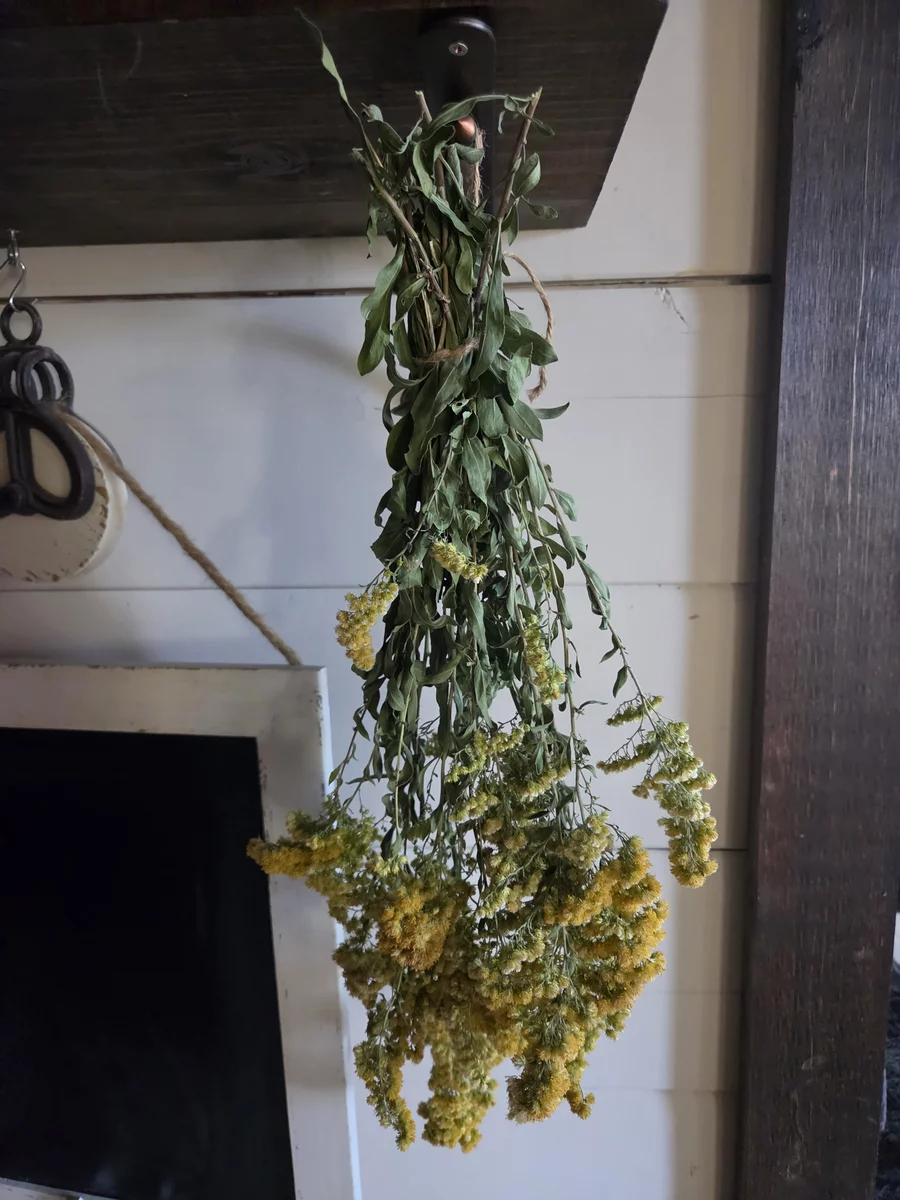
Dried goldenrod hung in a bundle, used in folk magic for luck and prosperity

Origin & Lore

Goldenrod's botanical name, Solidago, comes from the Latin solidare — "to make whole" — a nod to its long history as a wound-healing herb in folk medicine long before it found its place on the altar. Blooming in great golden sprays at the close of summer, it earned the bittersweet folk name "farewell summer," marking the turn of the season toward harvest and the coming dark half of the year.

In American and European folk magic, goldenrod became strongly associated with luck, money, and finding what is lost — old superstition held that wherever goldenrod grew wild and untended, buried treasure or good fortune was said to lie nearby. This made it a natural inclusion in prosperity charms and mojo bags meant to draw wealth and opportunity.

Its cheerful color and late-season bloom also tied it to sun magic and the last warmth of the harvest, making it a favorite herb for workings meant to carry the abundance of summer into the leaner months ahead.

Traditional Uses

  • ✦

    Prosperity & Money Drawing

    Carried in a mojo bag or sprinkled near a cash register or wallet to attract wealth and opportunity.

  • ✦

    Luck Work

    Carried or burned before games of chance, interviews, or ventures where fortune's favor is welcome.

  • ✦

    Finding What Is Lost

    Used in divination and finding spells, drawing on the old belief that it marks hidden treasure.

  • ✦

    Harvest & Abundance Rites

    Placed on the altar during autumn equinox and harvest celebrations to honor the season's abundance.

  • ✦

    Wound & Healing Work

    Included in healing sachets, carrying forward its old reputation as a mender of the body.

  • ✦

    Sun Magic

    Used in workings tied to solar energy, vitality, and carrying summer's warmth into darker months.

How to Work With It

Hang freshly cut stalks upside down in a dry, airy space until the blooms are fully dried and papery, as pictured, then store the dried flower heads in a sealed jar away from light. For prosperity work, add a pinch of dried goldenrod to a green or gold mojo bag along with a coin, and carry it with you or keep it near your workspace.

For a harvest altar, display a dried bundle as a seasonal offering, or crumble the flowers and scatter a small amount at your threshold during the autumn equinox to invite abundance into the home for the coming year. For luck before an important event, carry a few dried sprigs in a pocket.

⚠ Note

Goldenrod is frequently mistaken for ragweed and blamed for allergies it does not cause, but those with genuine plant allergies should still handle it with care. This entry is offered for folk magic and historical reference, not as medical advice.

☽ ✦ ☾
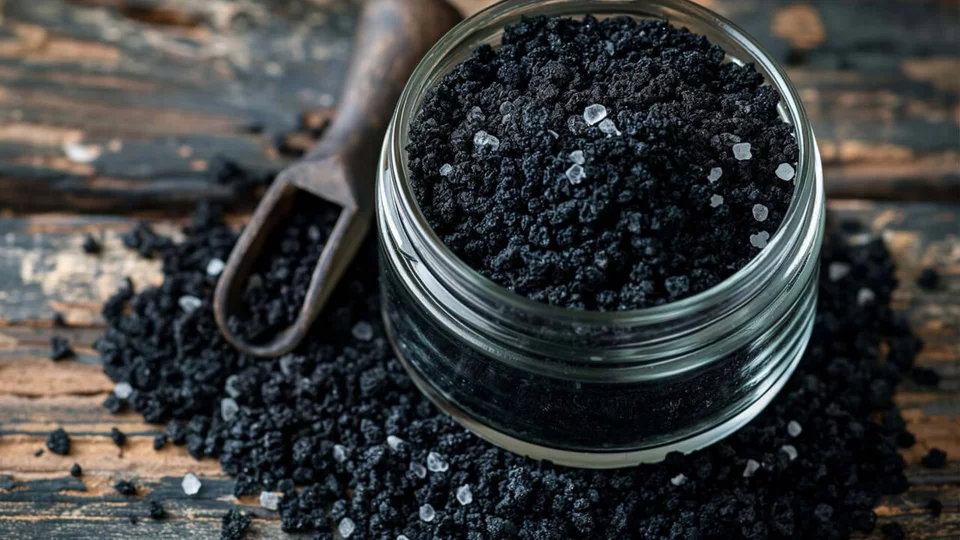
Black salt in a jar, used in folk magic for protection and banishing

Origin & Lore

Black salt sits at the crossroads of two of folk magic's oldest protective substances: salt, which purifies and repels, and ash or iron, which grounds and severs. Traditionally made by combining sea salt with charcoal, ash from a protective fire, scraped iron filings, or the swept dust of the home, black salt carries a far more aggressive and final protective charge than its white counterpart.

Where white salt cleanses and blesses, black salt is understood across hoodoo, European witchcraft, and Wiccan practice as a substance that repels and forbids — a hard line drawn against intrusion, ill will, and returning harm. It is sometimes called "witches' salt" for its long association with home and threshold protection, kept by practitioners as a first line of defense rather than a gentle clearing agent.

Because of its potency, black salt is traditionally treated as a one-use, sacrificial tool: once it has done its protective work, it is discarded rather than reused, its charge considered spent — much like a ward that has taken a hit and must be renewed.

Traditional Uses

  • ✦

    Threshold Protection

    Sprinkled across doorways and windowsills to forbid negative entities and unwanted energy from entering.

  • ✦

    Banishing

    Used to banish a harmful presence, habit, or influence from a space with finality and force.

  • ✦

    Hex Breaking

    Sprinkled around the perimeter of a home or added to a bath to break a curse or reverse ill-wishing.

  • ✦

    Reversal Work

    Used in mirror-box and reversal spells to send harmful intent back to its source.

  • ✦

    Boundary Setting

    Poured in a line to mark a boundary a person or spirit is forbidden to cross.

  • ✦

    Ritual Circle Protection

    Used to cast a protective circle for rituals involving spirit work or confrontational magic.

How to Work With It

To make your own, grind sea salt with cooled ash from a candle or protective fire, or with scraped cast iron filings, stating your intention of protection and repulsion as you mix. Store it in a dark jar away from your other salts.

For threshold work, sprinkle a thin line across the outside of your doorway, renewing it whenever you sense it has been "used up" by unwanted energy. For banishing, sprinkle a circle around the item or space you wish to clear, then sweep it outward and away from the home — always away from you, never back toward yourself.

⚠ Note

Black salt is for external and ritual use only — it is not food-safe and should never be ingested. Dispose of used black salt outdoors, away from your home and off your own property when possible, as it is believed to carry away what it has repelled.

☽ ✦ ☾
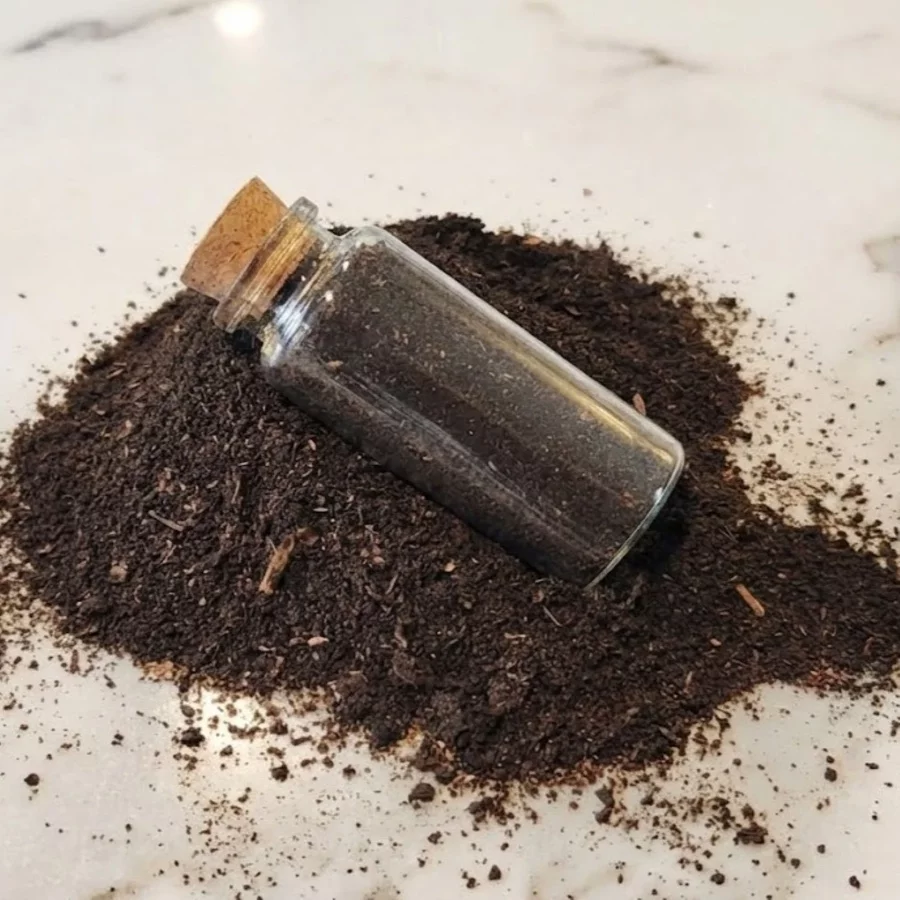
Graveyard dirt in a small corked vial, used in hoodoo ancestor and spirit work

Origin & Lore

Graveyard dirt is among the most powerful and carefully regarded curios in hoodoo and Southern conjure tradition. Taken directly from a grave, it carries the essence and permission of the spirit resting there, making it a direct line to the dead rather than a symbolic stand-in. Its power is understood to come not from the practitioner alone, but from the spirit who allows the dirt to be taken.

Because of this, graveyard dirt is never simply scooped up — proper protocol calls for announcing oneself at the cemetery gate, asking permission of the spirit whose grave will be worked with, and leaving a fair offering in exchange, traditionally coins, whiskey, or tobacco placed at the head of the grave. Taking dirt without offering payment is considered theft from the dead and is said to bring consequence to the practitioner.

Different graves are sought for different purposes in traditional practice — a lawyer's grave for legal matters, a soldier's grave for courage or protection, a child's grave (approached with particular gentleness) for innocence work — reflecting the belief that the character of the dead carries into the dirt itself.

Traditional Uses

  • ✦

    Ancestor Work

    Used on ancestor altars or in workings that call upon family spirits for guidance and support.

  • ✦

    Protection

    Carried in a mojo bag for powerful protection, drawing on the belief that the dead guard the living who honor them.

  • ✦

    Binding & Banishing

    Used in binding work to hold a person's harmful actions in check, or to banish them from one's life for good.

  • ✦

    Spirit Communication

    Placed near divination tools to open clearer communication with the spirit whose grave it came from.

  • ✦

    Curse & Hex Work

    Used in traditional goofer dust and advanced crossing work — approached only with serious ethical consideration.

  • ✦

    Court Case Work

    Dirt from a specific grave (such as a lawyer's or judge's) traditionally sought to influence legal outcomes.

How to Work With It

Before entering a cemetery to gather dirt, announce your presence and your intention aloud at the gate, and ask permission of the graveyard's own guardian spirit before approaching any individual grave. At the grave itself, speak to the spirit directly, explain your purpose plainly, and leave your offering before taking a small amount of dirt from the surface — never dig deeply into the grave itself.

Store the dirt in a labeled jar noting the grave it came from and the date, as its properties are tied to that specific spirit. For ancestor work, a pinch is enough to place on the altar; for protection or binding work, it is typically combined with other curios in a mojo bag rather than used alone.

⚠ Note

Always follow local laws and cemetery rules — many cemeteries prohibit removing anything from the grounds, and permission from groundskeepers or family may be required. This work carries real spiritual weight and is not recommended for beginners without guidance; curse and hex work in particular should never be undertaken lightly.

☽ ✦ ☾

📜

The Grimoire Grows

New entries added regularly — herbs, curios, oils, stones, and the old ways of working with each. Return often.